
Floor preparation is a critical step in preparing an existing surface to receive new flooring systems or coatings. Proper preparation ensures that the new floor will adhere properly, stay intact, and look great for years. Skipping floor preparation can lead to significant problems, such as peeling, bubbling, uneven surfaces, or delaminating coatings. These issues are often caused by improper floor preparation, which is why every surface needs to be clean, level, and free of adhesives, residues, and moisture to ensure successful installation.
Without proper floor preparation, a range of problems can arise after the installation of new flooring systems or coatings. If you’ve ever encountered uneven floors, peeling, or bubbling surfaces, it’s likely due to inadequate floor preparation.
Floor preparation is the first and most crucial step before applying any coating or flooring system. It is widely regarded as the most important factor in the success of your flooring project. Proper floor preparation ensures the durability and longevity of your floor. Conversely, a poorly prepared surface can result in costly repairs.
Why Do You Need Concrete Grinding?
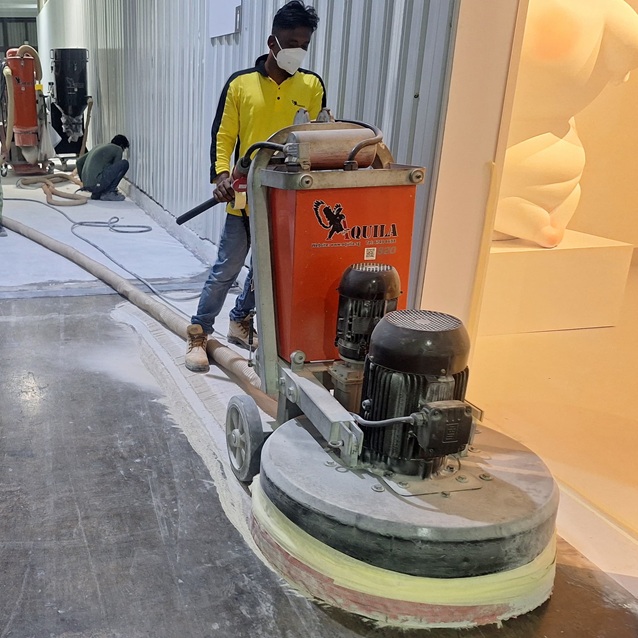
Concrete grinding is necessary to prepare a concrete slab for the installation of a new flooring system. Without the proper surface preparation, issues like unevenness, peeling, or bubbling can arise. For any floor covering installation, the concrete slab must be clean, level, and free of any minor bumps (even 0.1mm irregularities can cause problems) to ensure that the flooring system bonds properly.
Every flooring system, except carpet, requires proper floor preparation before installation. The slab must be clean, smooth, and porous for optimal adhesion. Any residue or bumps on the concrete can affect the floor’s quality and longevity, leading to the failure of the new flooring system.
If the proper floor preparation isn’t carried out, flooring installers will often refuse to proceed with the project, and manufacturers may void warranties due to the lack of correct preparation. Concrete grinding is necessary to remove residues and level the concrete, ensuring a clean and stable surface for the new flooring system.
Concrete grinding is particularly important if you’re considering polished concrete floors, as the quality of the underlying concrete will be visible. Additionally, if there are any trip hazards on the concrete slab, grinding is essential for safety and smooth installation.
Concrete grinding helps guarantee a smooth, well-prepared surface for 99% of floors, although it may not fix severe underlying subfloor issues. In such cases, floor levelling is required.
Why Is Floor Levelling Important?
Many people overlook the levelling of their concrete subfloor, leading to subtle dips or high points that affect the finished flooring. Common issues include concrete spills, contamination, or errors from the original pour. Low points can be caused by fretting, divots, holes, or damage like concrete cracks.
Key Points about Floor Levelling:
- It fills holes, divots, and imperfections in the concrete.
- It ensures the floor is perfectly flat to the required millimeter specifications.
- It guarantees flawless installation of the new flooring system.
- Floor levelling should always follow concrete grinding.
Concrete grinding alone will not make your floor completely flat. It’s essential to grind away any residues before applying floor levelling products or re-installing any flooring system, as these products require a clean, residue-free surface to bond effectively.
Is Concrete Grinding Necessary Before Floor Levelling?
Yes, concrete grinding is always required before floor levelling. Without grinding, the floor levelling product may fail to adhere correctly, resulting in issues such as cracking or popping up within a few months. This would void warranties, and you would be responsible for the failure, with no recourse for refunds, repairs, or replacements.
If there are residues from previous flooring systems (such as vinyl, tiles, glued carpets, epoxy, paint, or stenciled concrete), they must be removed through concrete grinding before proceeding with floor levelling. This ensures the new levelling product bonds properly, preventing long-term issues.
Floor levelling must be done after concrete grinding to ensure a perfectly flat and stable base for your new flooring system.
Failure to properly prepare the subfloor before installing adhesives, levelling products, or other bonding agents can result in poor adhesion, causing the entire system to fail. The failure rate of unprepared floors is over 90%, which underscores the importance of this step.
Conclusion
Proper floor preparation – through concrete grinding and levelling – is essential for ensuring the lifespan, safety, and performance of your new flooring system. It is an investment that protects your floor and ensures that your new flooring system adheres to warranty guidelines. Don’t cut corners by skipping this critical step; trust the experts to deliver a smooth, clean, and stable surface for your new floor.
Our expert team is here to provide the best concrete grinding and floor levelling services to ensure that your flooring system performs optimally for years to come.
Let us assess your project and guide you through the best process for your floor preparation needs.