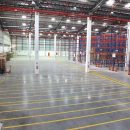
In an era driven by advanced machinery, robotics, and highly automated logistics systems, superflat floors are a critical component of efficient industrial operations. Their precise flatness and levelness directly influence multiple aspects of a facility’s performance, including:
- Selection and configuration of racking systems and logistics infrastructure
- Maintenance frequency and longevity of equipment
- Suitability for high-speed automation, robotics, and rapid picking systems
- Speed and stability of forklifts, AGVs, and other transport machinery
- Reduced risk of equipment collisions and material handling errors
- Enhanced overall workplace safety
Superflat floors support taller racking, narrower aisles, quicker throughput, reduced maintenance costs, and often a safer working environment—making them a valuable investment for plant owners and operators.

Concrete Placement for Superflat Floors: Key Factors to Consider
To achieve the required flatness and performance, every step of the design and construction process must be carefully planned and executed. The following considerations are essential:
1. Define Floor Performance Requirements
Understand the flatness and levelness specifications required by equipment manufacturers. Avoid assumptions based on previous projects—requirements must align with current equipment and operational needs.
2. Coordinate Soil and Structural Design
Ensure that the structural or floor designer works closely with the geotechnical engineer to agree on acceptable soil loading and settlement parameters. This coordination is vital in selecting the proper soil improvement approach.
3. Design Based on Structural and Operational Demands
Floor thickness, reinforcement, joint layout, and spacing should be based on applied loads and geotechnical data.
Superflat floors must handle concentrated wheel loads in defined paths – particularly in narrow aisle systems – necessitating durable, wear-resistant, dust-free surfaces.
Use appropriate concrete mixes, finishing techniques, and treatments (e.g., liquid surface hardeners) to ensure long-term durability.
4. Plan Floor Layouts with Field Teams
Collaborate with field operations and engineering teams to determine optimal concrete placement sizes and configurations.
5. Hold a Preconstruction Meeting
Organize a comprehensive preconstruction conference involving all stakeholders: the structural engineer, concrete supplier, finishing crew, testing agency, and geotechnical consultant.
6. Use Precision Equipment
Utilize laser screeds and laser-guided adjustable forms to achieve high precision in floor flatness and levelness.
7. Control the Environment
Place slabs under a roof or enclosure to mitigate the effects of sun and wind, which can lead to uneven curing and loss of flatness.
Ensure proper lighting is available during placement and finishing to assist the crews in maintaining quality and consistency.
8. Employ Experienced Crews
Engage skilled labor in sufficient numbers to ensure the slab is placed and finished consistently. Synchronizing work across the slab area supports even curing and a uniform finish.
9. Follow Specification During Installation
Ensure joint cutting, curing, and quality testing are completed strictly according to the project specifications.
10. Review Test Reports Thoroughly
Have engineers carefully evaluate concrete compressive strength, flatness, and levelness reports. Don’t just file or glance at these documents – they’re essential for verifying quality.
11. Plan for Long-Term Movement
Industry standards require floor flatness measurements within 48 hours of placement, but be aware that shrinkage and curling will continue over time and can impact long-term flatness.
12. Implement Crack Control Measures
Even superflat slabs are prone to cracking. Effective crack control starts with:
- The right concrete mix design
- Accurate joint spacing
- Proper detailing to reduce internal restraint
- Use of well-maintained finishing equipment and sound finishing techniques
- Consistent curing practices
Advanced methods such as post-tensioning, shrinkage-compensating concrete, synthetic fibers, and over-reinforcement can also be applied to minimize cracking.
By prioritizing careful coordination, precise execution, and informed material selection, superflat floors can be successfully designed and constructed to meet the high demands of modern industrial facilities.