
Proper maintenance is essential to preserving the durability and appearance of polished concrete. Key practices include regular cleaning, protective treatments, and quick response to spills.
Top 7 Maintenance Tips for Polished Concrete Floors:
- Regular Dust Removal
Sweep or vacuum frequently to remove dirt and debris, preventing surface scratches and preserving the shine. - Routine Mopping
Use a neutral-pH cleaner to mop the floor. This prevents chemical damage and effectively removes residues and light stains. - Periodic Sealing
Applying a sealer periodically boosts resistance to stains, moisture, and general wear, extending the floor’s lifespan. - Immediate Spill Cleanup
Address spills promptly to avoid staining and surface damage. This helps maintain a clean, blemish-free appearance. - Use of Protective Mats
Place mats or rugs in high-traffic areas to reduce surface wear and minimize the chance of scratches from foot traffic or abrasive particles. - Avoid Harsh Chemicals
Steer clear of acidic or highly alkaline cleaners, which can deteriorate the polished finish over time. - Scheduled Re-polishing
Over time, re-polishing with diamond abrasives can restore the original gloss and surface smoothness, especially in high-traffic zones.
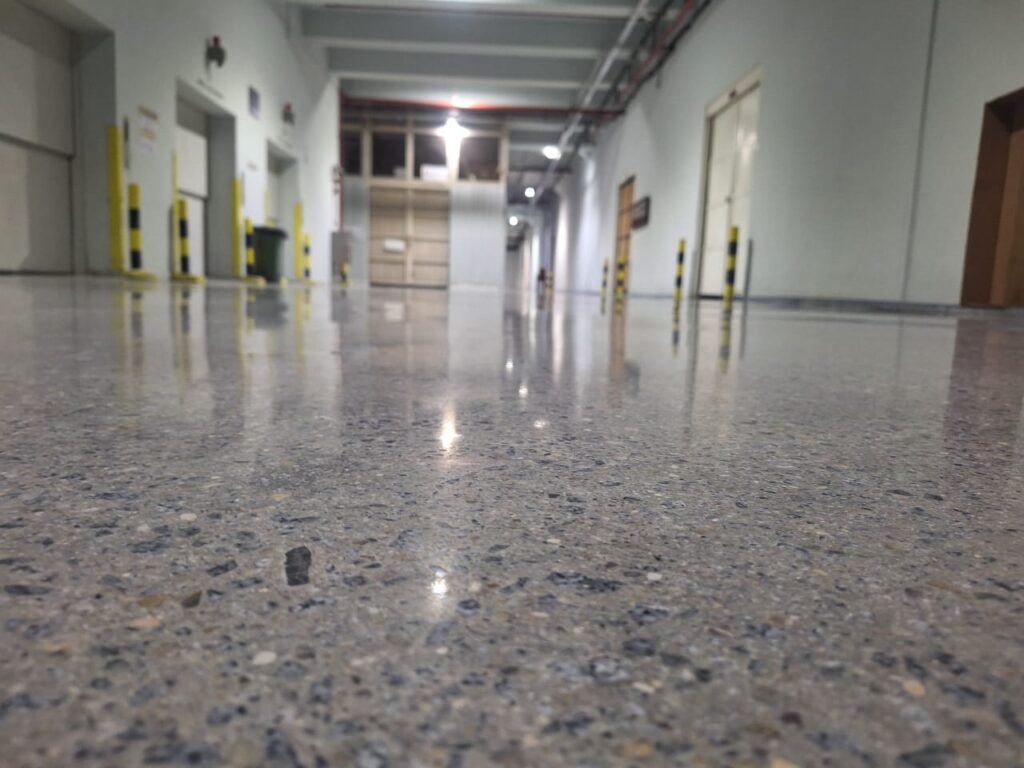
Polished Concrete vs. Concrete Grinding and Sealing
The primary difference between polished concrete and grinding-and-sealing lies in the finish quality and maintenance requirements.
- Polished Concrete involves a multi-step mechanical process using fine diamond abrasives to create a dense, high-gloss surface without the need for a topical sealer. It offers superior durability, longevity, and low maintenance—ideal for high-traffic areas like warehouses, retail spaces, and offices.
- Concrete Grinding and Sealing, on the other hand, grinds the surface to the desired smoothness, then applies a sealant for a matte or satin finish. While more budget-friendly and faster to install, sealed concrete requires periodic resealing and is better suited for residential areas, garages, and outdoor spaces.
Summary:
- Polished Concrete: Long-lasting, low-maintenance, high-gloss finish
- Grinding & Sealing: Cost-effective, moderate durability, customizable finish
How Long Does Polished Concrete Last?
Polished concrete is exceptionally long-lasting. With proper care, it can last 30 years or more. Mechanically polished concrete can endure up to 100 years, far outlasting surfaces like ceramic tile. Polished concrete provides unmatched longevity, especially in high-traffic environments. Its extended lifespan makes it a smart, cost-effective flooring investment.
Is Polished Concrete Slippery?
Despite its glossy finish, polished concrete is not slippery. The polishing process actually increases the surface’s coefficient of friction, making it compliant with OSHA standards for slip resistance. It’s a safe flooring option – even in commercial and industrial settings.
DIY or Hire a Professional?
While DIY concrete polishing is possible using rental equipment, it requires significant labor, precision, and experience to achieve a professional-grade finish. For larger projects or optimal results, hiring a professional is highly recommended to ensure quality, durability, and a consistent finish.